Balcony, Side Seat or Floor: Choose the View You Want
Choose a concert seat for the view you want: compare balcony, side and floor positions by sightline, distance and how much of the stage you can see.
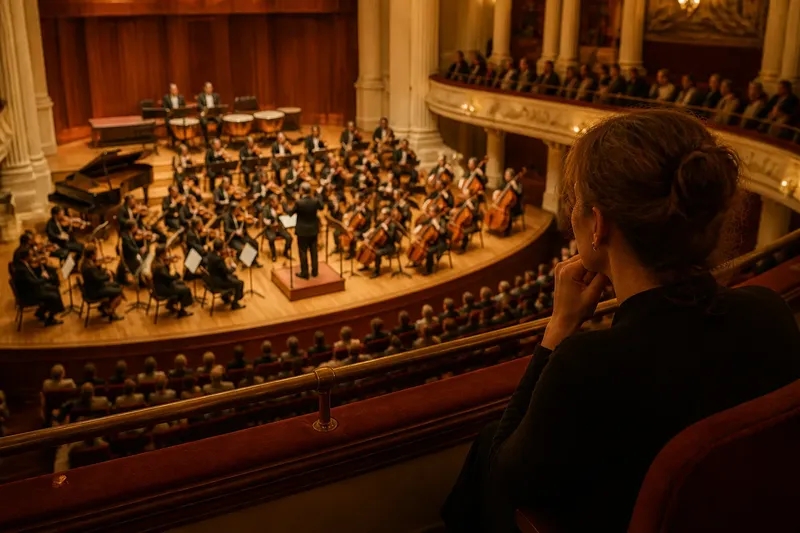
You open the concert hall seating map, zoom in, and find three tempting options: a central floor seat, a side seat close to the stage, and a balcony place above the crowd. For concert seating, the useful question is not simply which seat is “best”; it is what you want your eyes to follow, and how close you want to feel to the performers.
A seat shapes the concert’s visual character. From one position, you may watch a soloist’s face and hands; from another, you may see the whole ensemble and how its parts fit together. The room’s architecture, stage layout and the particular event all matter, so treat seat labels as clues rather than promises. Think of choosing a view like choosing where to stand around a table: moving closer brings one part into focus, while stepping back reveals the whole arrangement.
Choose the floor for presence and a forward view
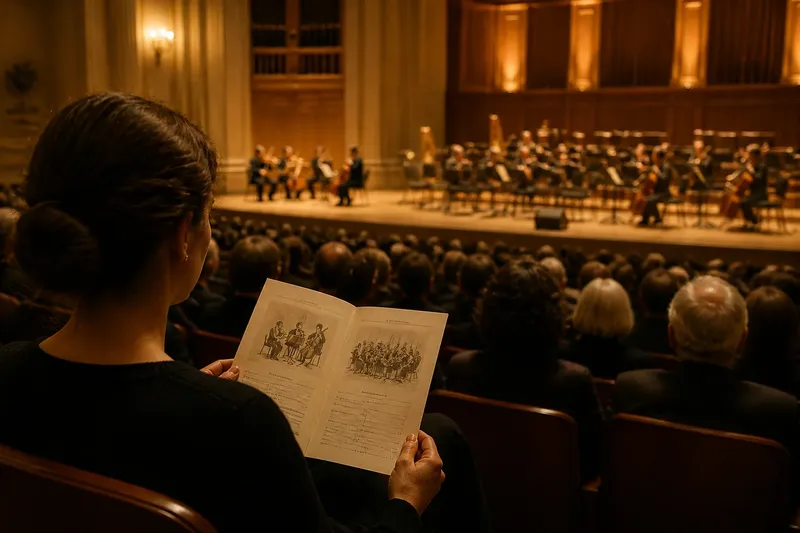
Floor seating often suits people who want to feel near the stage and look towards the performers rather than down at them. A central position can offer a straightforward view of a conductor, soloist or front line, with the stage filling more of your visual field than it does from farther back.
That closeness has a trade-off. Depending on the hall and the height of the stage, performers at the back may be partly hidden behind those in front. A conductor’s gestures might be easy to follow while a pianist’s hands or a singer standing near the side is harder to see. If seeing the whole group matters more than facial detail, a seat farther back or higher up may fit better.
Choose the floor if you value a sense of proximity, want to watch an individual performer closely, or prefer a view at roughly stage level. Look at the seating map for the stage shape and any central aisle that may affect your line of sight. If a plan shows a large orchestra, ask yourself whether you want to pick out a player or take in the ensemble. The answer points towards closeness or breadth.
Choose the balcony for a broad view of the stage
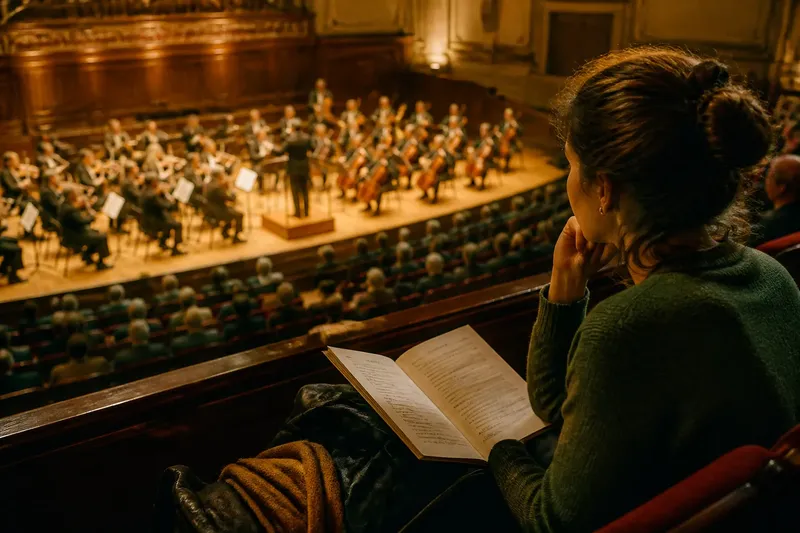
A balcony can make the stage read as one complete picture. From above, it may be easier to see the spacing between players, changes in formation and gestures travelling across the ensemble. That broader view can be especially appealing when the performance includes a large group or when you enjoy watching how musicians respond to one another.
Distance is part of the bargain. Faces and small movements may appear less distinct, and the performers can feel less immediate than they do from the floor. A balcony seat near the front may feel quite different from one tucked behind a deep overhang, so the word “balcony” alone does not tell you how open the view will be. Check the venue’s seating plan, photographs or seat-view notes if they are available.
Pick the balcony when an overview matters more than close detail, or when you would rather see the stage as a whole than concentrate on one performer. A position near the centre may give a balanced perspective; a seat further to one side may still give a satisfying view but can shift the stage’s proportions. Consider whether the balcony railing, overhang or neighbouring sections could obscure the parts you hope to watch.
Choose a side seat for angle and proximity
Side seats can bring you near the stage without placing you directly in front of it. This angle may make a soloist feel close and can offer a distinctive view of performers entering, turning or playing across the stage. It can also make the event feel less like a framed picture and more like a place you are sitting beside.
The angle can distort what is easiest to see. A musician at the far end may be partly hidden behind another player, and a conductor’s gestures may look different from the side. If the stage is wide, check which side your seat faces and whether the performance’s main action is likely to sit centrally or towards one edge. A seat labelled “side” could still be close or far, low or high; those details matter as much as its position across the room.
Choose a side seat if you enjoy being close and do not need a symmetrical view of the entire stage. It can suit someone interested in a particular performer or instrument, provided the angle leaves that performer visible. If your main aim is to follow the whole ensemble, compare the side seat with a central balcony position before deciding.
Match the seat to what you want to watch
Begin with the visual detail that would make the evening satisfying. If you want to watch a soloist’s expression, favour a nearer position with a clear line to that performer. If you want to follow a conductor’s cues and see the musicians respond, look for a view that includes both the podium and the wider ensemble. If you want to notice patterns across a large group, height and distance may help more than proximity.
Imagine you are choosing between a close seat at the far side of a wide stage and a central balcony place. You most want to watch a violin soloist positioned near the middle. Before booking, you check the stage layout and see that the side angle points towards the soloist but leaves the conductor partly obscured; the balcony gives a wider view of both. If following the conductor matters more than seeing the soloist up close, the balcony better fits your priorities. If the soloist is the main focus, the side seat may be the more appealing trade.
For a small chamber group, the floor can make individual gestures easier to notice, while a higher seat may show the players’ arrangement more clearly. For a large ensemble, a broad view may help you see how sections relate, though a nearer seat can make one part of the group feel more present. These are viewing preferences, not rules: the stage design and the hall can change the result.
Check these details before choosing a seat
- Stage shape: Look for a central platform, a wide stage or musicians arranged around a conductor. Choose a position that faces the part you most want to watch.
- Seat height: Compare floor, raised and balcony sections. If you want an unobstructed view over the ensemble, a higher position may help; if you want closeness, favour a lower one with a clear path to the stage.
- Side angle: See whether the seat looks across the stage or towards its front. If a particular performer matters, choose a line of sight that reaches them directly.
- Distance from the centre: Check how far the seat sits from the main action. A central position may give a balanced picture; a more distant one may make individual gestures harder to distinguish.
- Railing or overhang: Look for these features in venue images or seat-view notes. If they could block your view of the stage, compare another row or section.
- Your preferred focus: Decide whether you want faces, hands, ensemble spacing or the conductor’s gestures to be easiest to follow. Let that preference settle close choices.
Seat-view photographs can help, but remember that the camera may have been held at a different height or angle from your seat. A venue’s own seating map is useful for orientation; customer images and notes can add context. For access arrangements or a particular sightline concern, contact the venue directly, since staff may be able to explain what the map cannot show.
Which concert seat suits your view?
Is a central floor seat better than a balcony seat?
Neither is automatically better. Choose the floor for a closer, more immediate view of performers, and the balcony when seeing the arrangement of the whole stage matters more than facial detail.
Are side seats worth choosing?
They can be, especially if you like proximity and the stage angle gives you a clear view of the performer you want to follow. Check for anything that may be hidden behind another player or the stage edge.
Where should I sit to see the conductor?
Look for a seat with a direct view of the podium and enough of the ensemble to see the conductor’s gestures in context. A central position often makes that easier than a sharply angled side seat, but the stage layout should guide your choice.
How can I choose a seat if I cannot see a view photo?
Use the seating map to compare height, distance and angle, then check the venue’s description of restricted or partial views. If a specific performer or part of the stage is essential to see, ask the box office about that sightline before booking.
The best concert seating choice is the one that gives your attention somewhere satisfying to land. Before you book, name the view you most want—close detail, a direct angle or the whole stage—and compare seats against that priority. A central floor seat, side position or balcony place can each be the right answer when it matches what you hope to watch.