Why Concert Programmes Put Works in an Order
Why concert programmes put works in an order: hear contrasts, notice transitions and follow a concert’s changing focus without expecting one fixed formula.
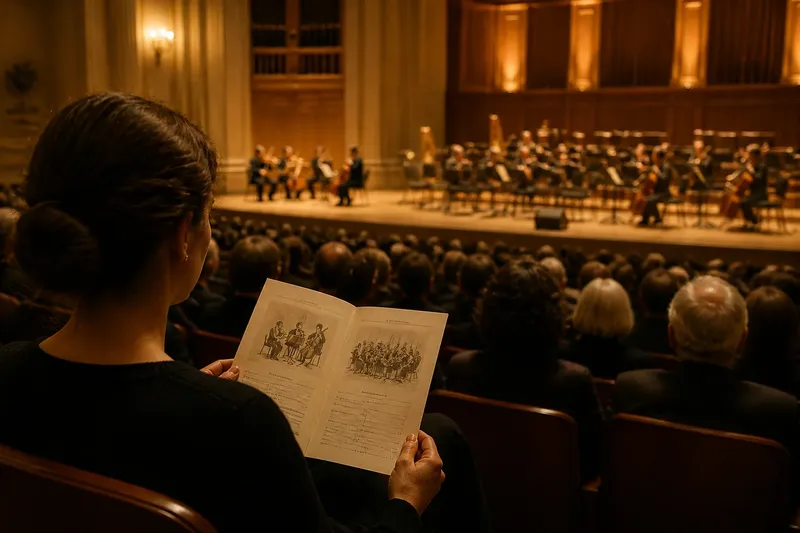
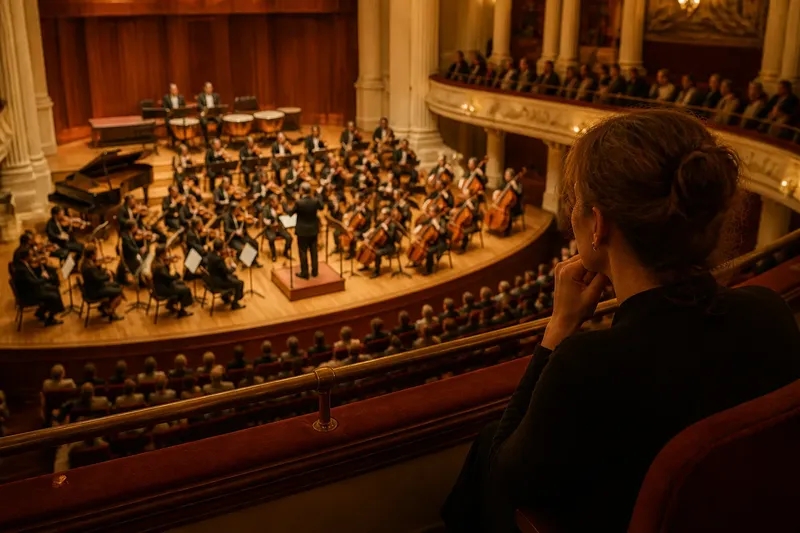
A quiet piece ends, the hall holds its breath, and then a bright, restless opening sends the room in another direction. The order of concert programmes can make that turn feel sharp, tender or unexpectedly natural. Listening for the joins reveals how a sequence shapes attention, even when there is no single formula behind it.
Order makes contrast audible
Put two works beside one another and each begins to cast a light on the other. A small ensemble after a full orchestra can seem unusually intimate; a slow, spare piece following a dense one may make each new sound feel exposed. The second work has not changed, but the ear arrives with a fresh point of comparison.
This contrast may involve scale, mood, texture, instrumental colour or pace. A programme can move from a tightly woven sound to open space, or from familiar musical gestures to something less predictable. The change is not necessarily a story with a beginning, middle and end. Sometimes it is simply a shift that lets attention reset.
Think of a concert sequence as a set of lamps illuminating different corners of one room. The lamps do not need to tell a plot; each makes certain details easier to see. In the same way, a neighbouring work can bring a quality into focus without serving as an explanation for it.
Notice what changes at the join
When one work finishes, resist the urge to decide immediately what the next one means. Attend first to the practical sensations of the transition: Has the stage become quieter or busier? Are the first sounds sustained, clipped, soft or forceful? Does the new work begin with a clear pulse, or does its rhythm take time to emerge?
These observations are useful precisely because they do not require specialist vocabulary. You might notice a flute line where there had been a thick brass sound, or hear the room’s sense of motion shift from a steady tread to a restless flicker. Such details give you a foothold before you start attaching labels to the music.
- Listen for density: If the sound feels crowded, notice whether the next work opens up; if it remains dense, compare which layers stand out.
- Track the pulse: If the beat feels regular, listen for whether it continues; if it is flexible or hard to settle into, follow the rhythm’s changes instead.
- Notice the opening gesture: If the work begins at once, attend to its first sound; if it emerges gradually or begins after silence, listen for what enters first.
- Compare the sound world: If different instruments or groups become prominent, follow the new colour; if the same ones remain, notice how their roles change.
- Watch your attention: If melody draws your ear, follow its line; if rhythm, colour or quiet detail stands out instead, stay with that feature.
- Check the stage: If performers or chairs change, use that as a clue that the sound world may shift; if the set-up stays the same, listen for changes in texture or pace.
There is no need to record every answer. Choose one noticeable feature and carry it across the join. If a piece ends with a lingering sound, for instance, see whether the next begins by interrupting that stillness or extending it in a different form. The aim is not to solve a puzzle, but to hear the change itself.
Programme order can serve different purposes
Concerts often need to make practical and artistic decisions at once. A large work may call for a particular place in the event; performers may need a change of instruments or a pause between demanding pieces. An interval can divide the programme into distinct stretches. These considerations can shape the sequence alongside questions of contrast and musical character.
A familiar pattern might place a compact work near the start, a longer one before the interval, and another substantial piece afterwards. But plenty of programmes take a different shape. A sequence may group works by one composer, put unlike pieces together for contrast, or let a quieter span follow a forceful one. What feels like a surprising choice to a listener may reflect several needs working together.
For that reason, a printed order should not be treated as a code that promises one hidden narrative. A composer’s name, a shared instrument or a similar title can offer a useful point of curiosity, but the actual transition remains something to hear. Let the sequence suggest questions rather than dictate answers.
Follow transitions without forcing a story
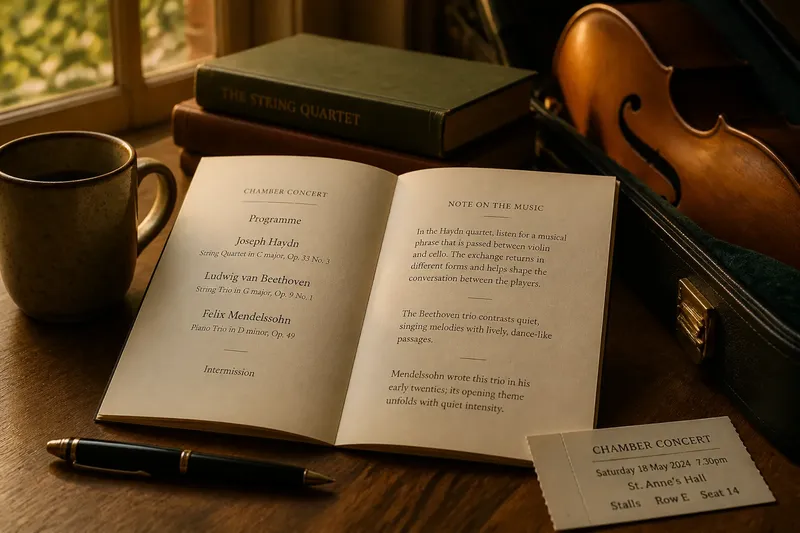
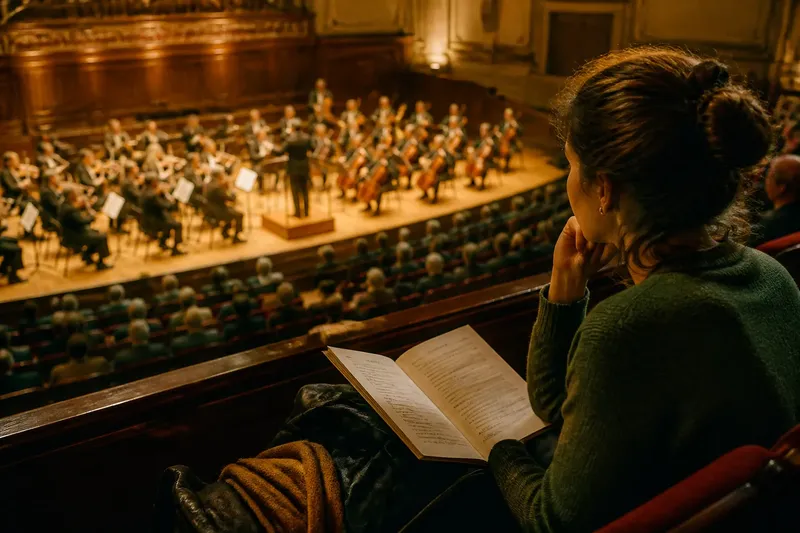
One simple listening habit is to give a transition a little attention before each work begins. Read the title and performers’ details if they interest you, then set the page aside when the sound starts. At the end, recall one feature from the work that has just finished and compare it with the new opening. Keep the comparison concrete: volume, texture, pace or instrumental colour.
Say you attend a concert where a calm piece for a small group comes before a vigorous orchestral work. You notice the smaller ensemble’s steady pulse as the last sound fades. The orchestra then begins with a similar rhythm, now carried by more instruments; your answer is that the join offers both continuity of pulse and a sharp change in scale. If the opening instead has no clear pulse, the trade-off is different: you can hear the contrast in rhythm as well as size. Either way, this invented situation gives you a specific point of entry without proving that the whole programme was designed around that link.
If you lose track of the order, let the sound restore your bearings. A change in the number of performers, a pause to rearrange chairs or the return of a solo instrument can mark a new section of the evening. You do not need to follow every cue. One clear observation can be enough to make the sequence feel less like a list of titles and more like a series of changing listening conditions.
What do listeners ask about concert programmes?
Why do concerts often begin with a shorter work?
A shorter opening can give listeners and performers time to settle into the room before a larger work. It is a common option, not a rule, and a concert may begin with a substantial piece or a different kind of opening altogether.
Does the order tell me what the most important work is?
Not necessarily. Position can reflect duration, instrumentation, practical demands, contrast or the shape of the whole event, so it is safer to hear the sequence as a set of choices than as a ranking.
Why might related works be separated?
Separating them can create room for contrast or place another piece between them as a change of atmosphere. Related works may also sit together; the effect depends on what the surrounding programme asks the ear to notice.
What if I cannot hear a connection between two works?
That is a useful response. Notice the clearest difference, such as a shift in scale or pace, and allow the sequence to remain varied rather than inventing a connection.
Let one transition stay with you
After the concert, you might remember a single join more clearly than the titles that surrounded it: a sudden change in energy, a shared colour, or a silence that seemed to widen the room. That small impression is enough to make the order of concert programmes easier to hear next time. Follow what actually changes, and let the music decide whether the sequence feels like contrast, continuity or simply a fresh start.